I am absolutely flattened by work this week, and next week promises to be more of the same. It's the point in the academic year when all the Master's and PhD students have to hand in literature reviews and project proposals, and all of them suddenly panic and realise that the classes I taught them (carefully timetabled to coincide with the point at which they were meant to start work on their literature reviews and project proposals) actually contained crucial, useful information and they probably should have been paying more attention and doing the suggested follow-up activities while what I taught them was fresh in their minds. Because they haven't done this, they all, of course, contact me at once, now. It's good to be needed — I wouldn't have a job, otherwise — but I wish they didn't all need me so much and all at the same time.
Anyway, let's use another snowflake_challenge prompt for the Friday open thread: Talk about your creative process.
I know a lot of you have already answered this in your own journals, so feel free to link to your posts in the comments rather than writing things out again. Or, answer in the comments if this is a brand new topic for you!
My first concert of the calendar year, and almost a month since the last one.
The first time I heard Edward Gardner guest conduct SFS, I thought he led hot and sizzling performances. Half of that Edward Gardner showed up this time.
The half that didn't led the Bruch G-minor Violin Concerto. Soloist Randall Goosby had a remarkably light and smooth tone, and drove his part forward pretty well, but as an orchestral piece this was bland and dull. I wasn't too excited by the rendition of Vaughan Williams's Overture to The Wasps either, though the sound of the orchestra was unusually broad and shiny, especially in the winds.
This sound quality reappeared in places like the flute choir passages of Holst's "Saturn," and yes, The Planets was the good half of the concert. Hot and sizzling it was when the score called for it, but the most remarkable movement was the quietest, "Neptune," a most crisp and clear but delicate performance of an often-fuzzy piece. I left stripped of the forebodings I'd felt during intermission.
There’s hope for the survival of this great lady, yet.
Paul Krugman is one of my go to people. Clear-eyed, calm, not crouching in a corner.
I thought the process of losing our democracy would be a slow, ineluctable descent as institutions and people resigned themselves to the seemingly inevitable. I expected the process to be akin to what happened in Hungary, where ordinary people’s lives remained mostly normal amid Viktor Orban’s authoritarian takeover. There, independent media have been suppressed, business has been co-opted by crony capitalism, the judicial and electoral systems have been rigged. But Orban didn’t employ armed thugs to brutalize, maim and murder people in the streets. Rather, Hungary’s democracy fell to a quiet, creeping coup.
My early fears weren’t completely off base. Everything that transpired in the first few months of Trump 47 suggests that if our own home-grown fascists had been as patient as Orban, a de facto dictatorship would have been established here with relative ease. Our vaunted institutions, our system of checks and balances, either capitulated quickly or were overrun by Trump’s onslaught. Big business quickly bent the knee, immediately directing its focus to how to make money through Trump trades. The Supreme Court and the Republican Congress abetted and even encouraged every fascist move.
Yet the US has not replicated Hungary’s measured slide into authoritarianism.For Trump and his minions aren’t patient. They want retribution and subjugation. Threats and dominance displays are how they operate. They burn with racism, misogyny, and performative cruelty.
So now we have Minneapolis, America’s laboratory of democratic destruction, where ICE agents have gone fullSturmabteilung, terrorizing and even killing not only people with brown skin, but anyone who protests or gets in their way. And the irony is that this may be for the better.
For a gradual destruction of democracy would have been hard to resist. After all, who wants to rock the boat when there’s money to be made, jobs to keep, perks to be had, convenient bothsideism to be upheld, if you will just be silent and keep your head down?
Instead, however, the assault on freedom and civil liberties is open, lurid, and impossible to deny.
While our institutions and our elites have failed us, ordinary Americans are rising to the occasion.
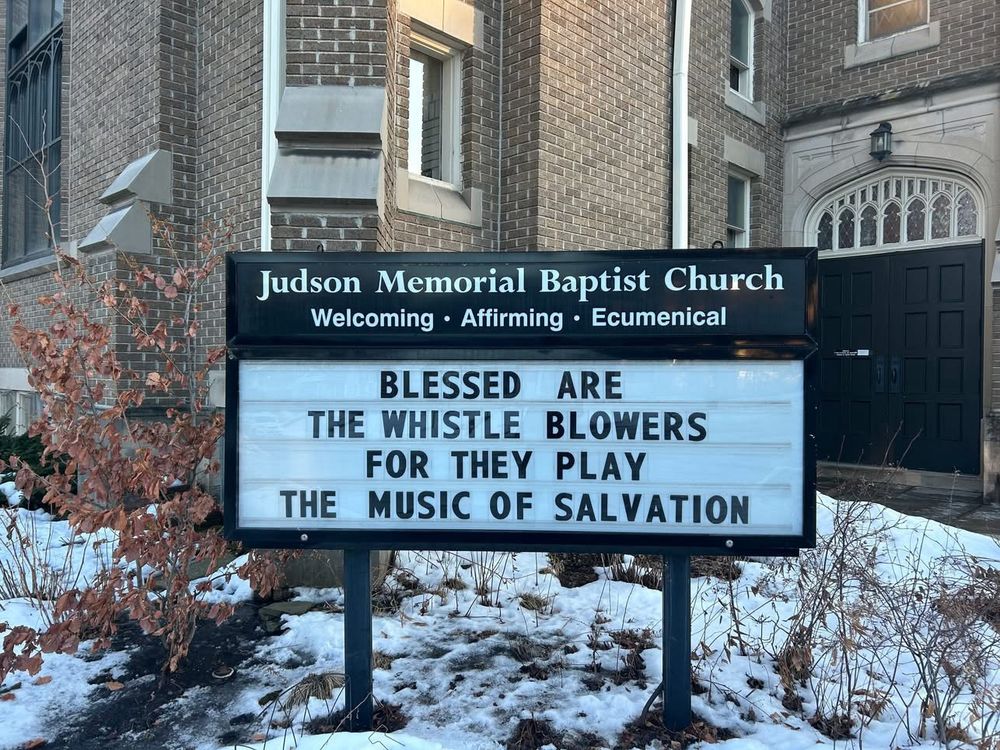
If Minneapolis is a laboratory of democratic destruction, it has also become a laboratory of civil resistance — organized civil resistance, of a kind we haven’t seen since the civil rights movement. When ICE is on the rampage, crowds of brave Americans, summoned by texts and whistles, quickly gather to stand against the masked men with guns. As the outrage grows, people of common decency — like the federal prosecutors in Minnesota who chose to resign rather than pervert justice by going after Renee Nicole Good’s wife — are taking a stand.
In a post earlier this week, or perhaps it was just in a comment, I talked about there being two faces to “What If?” We mostly fall into the trap of “what if-ing” toward the negative, but it’s more constructive if we can also imagine “what if” in a positive direction. So I especially like how Paul Krugman ends this piece.
So what’s happening now is both horrifying and inspiring.How will it all end? I don’t know, but maybe, just maybe, our democracy isn’t being destroyed — it’s being forged anew in the hands of the American people.
I know this has been front-paged at least once, maybe twice, but in case you missed it.
Okay, let’s see if I can get this together, shall we? Tried on Tuesday night, but I was too tired from work and the Tesla Takedown Tuesday protest.
Here’s a pic of one section, taken from across the street, call it “proof of fuck you, Elon”:
It may not seem immediately related, but naturally, it all is.
Now. Where. Were. We? Ah yes, the 2026 elections that Trump knows the Republicans are going to lose, and lose badly. It’d take a lot to lose the Senate, but it’s possible, and he – and his MAGA movement – do not give up power voluntarily.
In part one, I provided a couple of action items, of things you can be doing; in this one, I can be more specific about what needs to happen and when.
Before we can get into the meat of that, though, we have to talk about something else: timelines.
This writeup is something like the timeline I think we can expect if there are no other major events that allow him to reach his and his administration’s MAGA goal of declaring insurrection and imposing martial law, either de facto or de jure, through other means, like those he’s trying right now in Minnesota.
In reality, all these potential timelines are intertwined, affecting each other directly and indirectly. But if I’m going to unwind them from each other enough to make them clear to other people, I have to leave those connections out. It’s not really valid to leave them out; it’s just necessary for illustrative purposes.
It also assumes that projections as we have now continue, that the polls don’t swing the other way, that the 86% of people who oppose his plan to attack Greenland suddenly decide it’s actually a good idea, that everybody decides Federal violence against Americans is good actually, that just enough people of colour decide white nationalism is basically okay because they’ll be the exception (spoiler: they won’t be the exception), and so on. Americans are stupid motherfuckers with a shorter memory span than mayflies, so I don’t rule it out. But let’s say that he remains widely hated.
With that framing set, let’s get into the election itself. Most of this will seem awfully familiar to you if you paid attention in 2020; it’s not a new plan. It has some new details, but the broad strokes are identical.
First, Trump will spend as much time as he can afford in 2026 working to discredit the elections in advance. He’s already been doing this, attacking blue states as corrupt, as fraudulent, and attacking mail-in and machine-counted votes. He says he wants to lead a campaign to eliminate both, but particularly vote by mail.
(The interesting part of his attacks on machine counting is that every state uses machine counting, because it’s better! It is straight up better and more accurate. What’s important is to keep paper originals for hand-counting in the event of any necessary recounts, and most states have provisions for that, both machine and, if close enough, by multiply-checked hand counting, which is where you do get more accurate than machine counts, at the cost of high expense, both in money and in time.
This may be a matter of expanding his – and his administration’s – attacks on voting to all states, even red states, as a general attack on democracy and voting. As demonstrated previously, this is now a white nationalist movement, and white nationalism is by its nature fascist. There is a ruling minority fit to rule over society, and all the rest of society must fall into line or else, and that never ends up a democratic state. It’s just fascism.)
Secondly, he will do everything he can to disrupt the election mechanically, via new pronouncements, new executive orders, new court cases, whatever he and his evil crew can manage. He’s already promised he’ll do this, and for once you can take him on his word. It’ll continue. He’s just lost in court again – against us in particular – with the courts shutting down his attempts to break our electoral system, but he’ll just file something new. He’d shut them down entirely if he could – he’s out there saying so – but I don’t think he’ll be able to manage that.
Finally, as votes come in, he will attack slow-counting states (like the Cascadian states, but not just) demanding that their voting and/or counting stop as soon as he and his ruling clique see the best sub-count of results they think they’re likely to see. Given voting patterns, that will mean stops so early that not even votes even cast on the day of the election would be counted.
States will, naturally, ignore this and continue counting.
At that point, his administration will condemn the results as fraudulent. Will there be legal cases? One assumes there will be legal cases. The bigger question is whether there will be ballot seizures by Federal agencies, and given what’s happening with the murder of Renee Good, it seems likely. Besides, they tried some of that in 2020; they will try it again.
Frankly, if you’re reading this, you lived through the last coup attempt and you already know how all this works. The point of the lies isn’t to convince anyone; the point is to keep the lies swirling and the pot stirring so everyone involved or willing to go along keeps pretending the lies about the elections are genuine concerns, or at least worth considering.
Then: remember false electors?
Remember all those fake “alternate slate” electors? Remember those?
Remember how some of them tried to show up in DC to get counted in place of the real ones? Some of them got arrested. Some of them got charged, some of them got convicted, for fraud.
Let’s talk about disputed representation, shall we?
They won’t actually be under dispute. Not in reality. The results will have been announced weeks before, along with the results of many recounts. Court cases will likely have been cleared away, hopefully with some amount of compliance to the law involved.
But all that was true in 2020, and that didn’t stop Trump from trying anyway. He and Vance and Miller and the whole rotten crew will say they’re disputed, and may even try to pretend they mean it.
Since the Senate – not the House – officially opens the new Congress, let’s look there first.
The Senate opens the new Congress because it is the continuing body, with two thirds of its membership returning. It doesn’t have to adopt rules; it can move into action very quickly.
One of the first acts will be for Republican Secretary of the Senate Jackie Barber to receive election certificates from any and all new Senators, which will then be announced by…
…President of the Senate and Vice President of the United States J.D. Vance.
I can’t speak to the Honourable Jackie Barber, but I can most definitely say that unlike Mike Pence, J.D. Vance is fully onboard with these projects. He will not hesitate to perpetrate the treasonous fraud should they decide to go with it.
Meanwhile, in the House of Representatives, there are no returning officers, and the VP plays no role. Instead, the duty of receiving the certificates of election, announcing the new Representatives, and calling the House to order lies with the previous Clerk of the House. Or, if they’re not available, the previous House’s Sergent-at-Arms.
McFarland has seen some shit. I have some doubt as to whether he’d go along. I don’t know enough about McCumber to have any guesses. But I do know that either way, recognition of new Representatives is all in Republican hands.
So. It’s a simple game for four players. I stress again: none of this is legal. It is barely pretending to be legal, it’s a hypothetical plan for an illegal coup with just enough pretence at legality to let people who want to believe in it go ahead and say they believe in it. It’s not about a plausible legality at any point; it’s just about permission to pretend that it’s legal.
Trump et al declare the elections disputed or just fraudulent, and either presses still-open court cases or files new ones in the days before January 3rd.
Citing open cases and/or “clear election fraud,” J.D. Vance either recognises “alternate slate” Senators or simply refuses to recognise any new Senators from “disputed” states, as Mike Pence was supposed to either recognise the fraudulent electors or declare an impasse, and not allow “either slate” from “disputed” states to be counted. And so, the Senate is in session, with a quorum and a Republican supermajority – along with, possibly, several empty seats.
Kevin McCumber – or a replacement we haven’t met yet, still to be appointed – does the same dance in the House. If Kevin gets swapped out late in the year, I would just go ahead and assume that’s for election rejection purposes and that the coup is on.
Regardless, if the House does not have quorum, it cannot do business, so that would be one play. Another play would be to seat false Representatives with a Republican supermajority, seating those few Democrats elected from heavily-jerrymandered Republican states as “fairly elected,” along with the false Republican representatives from Democratic states.
It is quite possible that – citing the arrests of some “alternate slate” electors in 2021 – Trump orders the arrest of the actually-elected Senators and Representatives.
Protests erupt en masse; Trump declares an insurrection, invokes the Insurrection Act, enacts martial law, and we get to see whether the US Army will refuse illegal orders to occupy several American states and oppress the citizenry in the face of a coup, and the last remnants of the old Republic will have been swept away.
…
Christ, this all sounds so stupid, doesn’t it? It sounds like such conspiracy theory bullshit. But I remind myself and you both that this was the 2020-2021 plan, and they almost pulled it off. With someone like J.D. “Couchfucker” Vance in place of Mike Pence, you know the elector count would’ve stalled out. It’s not even a question.
So as thick, as just fucking dumb as all this is…
…we have to be ready for it. At very least, we have to be watching very carefully for the same progress steps as were clearly visible last time. Building up to the January 6th coup attempt was largely visible. I was warning neighbours, who were not really believing me until it happened. I doubt it will be much different this time.
We have to be ready for a national, comprehensive protest if this goes down. A walkout of everyone, on every level. Absolutely nothing can be allowed to be done; no work, no school, no optional spending, no nothing. Pay your rent if you must, but don’t buy anything.
A lot of leftists and posers keep going “general strike when?” THIS IS WHEN, and the time to prep to pull it off is now.
Demanding “general strike now!” as in right now, as I write this, with no prep and no coordination which is so obviously a recipe for failure that at this point I presume they’re opposition ops, roleplayers, or useful idiots. This won’t be some kind of holiday. You will have a new, unpaid job: marching in the streets demanding removal of the dictator. It will not be safe, but it’ll be your new temporary career – as well as mine – despite that. You need to have food stocked up in advance, so you don’t have to worry about bank cards not working. You may need to have water stocked up, but hopefully not. You need to be ready to help people who haven’t prepped for fucking anything because it’s not real until it happens to them. And you need to have communications and networks set up, preferably ones that don’t rely on the internet.
FRS radios, which do not require a license, would be good purchases right about now. Just for one example. Get a HAM license, if you can; the technician license is not particularly difficult. And don’t just buy shit and stick it in a drawer, either. Know how they work. Get used to using them in advance.
But it can’t be just up to individuals self-organising; that’s not enough. States have to be ready for this possibility. States will have to protect their citizens; despite Trumpist protestations, they are not “extensions” of the Federal government. Legally, in theory, it’s the states which are ultimately sovereign; states can dissolve the Federal government without its permission. It’s right there in the Constitution.
That dissolution won’t happen here, not de jure (by law), but it could happen de facto (in reality) for a little while, or maybe a lotta while, depending upon how badly everything goes in this event. States must be ready to act both on their own and in alliance to protect themselves, and protect us, while we all work to protect each other.
Cascadia, in short, may be a necessary reality forced upon us. The New England Confederation may rise from the ashes of history. California may, in fact, über alles for a while – in reality, if not, of course, in name.
If Trump and Vance and Miller et al do this, it’s not just that it will get ugly, it’s that it has to get ugly in order to reverse it.
In some small ways, we’re already there. We’re getting tastes of it now. They’re small samples, limited, but still scaling to the tongue. Minnesota, in particular, is right now having to protect its citizens from the Federal government, which is threatening retaliation and the Insurgency Act in return.
Support Minnesota, help them, participate in walkouts, participate in protests, do whatever is needed, because if we get there, the full-bore version – the version Trump and Miller and Vance and Musk and the TESCREAL crowd so desperately want – will be much, much worse.
All this could’ve been prevented. But we ran out of “easy” ways to defeat it a year and a half ago, having pulled a semi-easy way back out of the fire via the seemingly impossible feat of getting Joe Biden elected President, and defeating Trump’s first coup attempt. We ran out of options to stop it from ever happening almost 20 years ago, in 2007, when the Democrats gave Bush II a pass on his illegal torture regime. We ran out of easy ways to stop this crisis from even starting in 1998-1999, when Christian Fundamentalist political culture took over GOP political culture at the ground level and the money people could not be convinced this was a really, really bad idea despite how many low-level roles the fundies chose to fill.
We no longer have “easy” ways, and we no longer have “good” outcomes. Too much damage has been too long done. What we have instead of “easy” and “good” is hard work, salvage, and, if we’re lucky, opportunities to rebuild.
But we do still have those. By some miracle – and by a lot of hard work by some of us – we still have that much.
If Trump, Vance, Miller, and the rest of the traitors try this, though, and we aren’t ready – we won’t even have that.
The comment section on this post is open for discussion with other readers on any work-related questions that you want to talk about (that includes school). If you want an answer from me, emailing me is still your best bet*, but this is a chance to take your questions to other readers.
* If you submitted a question to me recently, please do not repost it here, as it may be in my queue to answer.
We already have 9 participants in the regular challenge and 3 participants for Team Omega. But there are still about two days until the end of week one. Jump in into the game and earn some points!
Post all your finished works at fandom_empire_workplace until Sunday, January 18, 18.00 UTC, but I will allow belated works until I've made the closing post Countdown here.
My aunt and cousins are extremely crunchy. Among many other things, they rant about Western medicine being full of evil chemicals and just a way for pharmaceutical companies to make money. They insist there are natural alternatives. Never mind that they live in the UK (with free healthcare), while these "alternative practitioners" cost them hundreds of pounds.
The novel Semiosis is now available in Ukrainian from Lobster Publishing.
This has to be the most beautiful edition of the book, as you can see in these Instagramreels.
I know just enough of the Cyrillic alphabet to know that СЕМІОЗИС is Semiosis and Сью Берк is Sue Burke.
Meanwhile, my heart breaks for the people of Ukraine. I visited Kyiv in 2006 when it hosted the European Science Fiction Convention, and I was impressed by the elegance of the city and the patriotism of its people. They made sure, back in 2006, that I understood they were not Russian.
Finding my damned glasses, which were lurking underneath the pile of
sweaters, blankets, and other stuff draped over the arm of the couch
nearest my desk.
Discovering that nova, my fileserver, still has python2.7 on it. The
reason I wasn't able to post through it was that neither python2 nor my
posting program (ljcharm) was installed.
Assuming this can be posted, being able to upgrade (Thinkpads) Raven
(which I was using for posting) and Panther (which I hadn't realized
wasn't upgraded).
I will get to Challenge #6: Top 10 at some point. I want to talk about theatre I've seen, but that requires more time and thought than I currently have.
Also! Tomorrow! threesentenceficathon begins! (pleasepleaseplease let me inspired just a leetle bit...)
Challenge #7: Three Things I Like About Meeee
1. When I start something, I finish it. This can be bad (sunk cost fallacy), but generally (see below) is a plus.
2. I’m funny. For a while I worried that my humor was too off-the-cuff, and I couldn’t translate it into writing. But that’s not true! I rather enjoy reading my own stuff and LOL-ing at my occasionally frequently juvenile jokes.
3. I say the thing that everyone’s thinking but is afraid to verbalize. When I was younger, I was too blunt, and this honesty was often off-putting. As I matured, I learned to leaven the truth with humor, to manage my tone, to not make it a personal attack, which really, really helps.
Challenge #8: Creative Process
Rather than get into the weeds of my process, which aren’t that interesting, including to me, I’ll just say that, at a macro-level, what most drives my writing process is that when I draft something and determine it’s worth pursuing, I finish it. Once I broke my two-decade plus writing drought, the third piece of fanfic I wrote was a 86K word novel. Did it receive any comments or kudos as I posted it, chapter-by-chapter? Not really. But by god I was going to finish it. Not just finish it, but edit it structurally so that it flowed better. One of the last pieces of fanfic I wrote was an even longer, Nancy Wheeler from ST story which had a very limited audience and required a whole lot of research. Didn’t matter. I *needed* to get closure on it before I could start writing original fiction and apply to graduate school.
This is helping me now that I’ve transferred my creative energy from fanfic to original fiction. Folks, writing a novel is a giant fucking pain in the ass that I do not recommend. And unlike fanfic, I have no guarantees that someone will eventually read it and love it.* Having practice finishing large projects is very helpful (“I know I can do this!”), as is my bull-headed** determination to cross an item off my to-do list.
(For me!) finishing a project is one of the best ways to learn and improve. The sense of satisfaction! The confidence boost! Unparalleled.
* Which eventually happened with both my fanfic novels. Not many people, but I write for niche audiences. :P
** Did I mention that I’m a Taurus and was born in the year of the ox?
Passenger: "You do know those are priority seats for disabled people, don't you?"
Friend: "You do know not all disabilities are obvious, don't you?"
Passenger: "What's your disability?"
More than a decade after Aaron Swartz’s death, the United States is still living inside the contradiction that destroyed him.
Swartz believed that knowledge, especially publicly funded knowledge, should be freely accessible. Acting on that, he downloaded thousands of academic articles from the JSTOR archive with the intention of making them publicly available. For this, the federal government charged him with a felony and threatened decades in prison. After two years of prosecutorial pressure, Swartz died by suicide on Jan. 11, 2013.
The still-unresolved questions raised by his case have resurfaced in today’s debates over artificial intelligence, copyright and the ultimate control of knowledge.
At the time of Swartz’s prosecution, vast amounts of research were funded by taxpayers, conducted at public institutions and intended to advance public understanding. But access to that research was, and still is, locked behind expensive paywalls. People are unable to read work they helped fund without paying private journals and research websites.
Swartz considered this hoarding of knowledge to be neither accidental nor inevitable. It was the result of legal, economic and political choices. His actions challenged those choices directly. And for that, the government treated him as a criminal.
Today’s AI arms race involves a far more expansive, profit-driven form of information appropriation. The tech giants ingest vast amounts of copyrighted material: books, journalism, academic papers, art, music and personal writing. This data is scraped at industrial scale, often without consent, compensation or transparency, and then used to train large AI models.
AI companies then sell their proprietary systems, built on public and private knowledge, back to the people who funded it. But this time, the government’s response has been markedly different. There are no criminal prosecutions, no threats of decades-long prison sentences. Lawsuits proceed slowly, enforcement remains uncertain and policymakers signal caution, given AI’s perceived economic and strategic importance. Copyright infringement is reframed as an unfortunate but necessary step toward “innovation.”
Recent developments underscore this imbalance. In 2025, Anthropic reached a settlement with publishers over allegations that its AI systems were trained on copyrighted books without authorization. The agreement reportedly valued infringement at roughly $3,000 per book across an estimated 500,000 works, coming at a cost of over $1.5 billion. Plagiarism disputes between artists and accused infringers routinely settle for hundreds of thousands, or even millions, of dollars when prominent works are involved. Scholars estimate Anthropic avoided over $1 trillion in liability costs. For well-capitalized AI firms, such settlements are likely being factored as a predictable cost of doing business.
As AI becomes a larger part of America’s economy, one can see the writing on the wall. Judges will twist themselves into knots to justify an innovative technology premised on literally stealing the works of artists, poets, musicians, all of academia and the internet, and vast expanses of literature. But if Swartz’s actions were criminal, it is worth asking: What standard are we now applying to AI companies?
The question is not simply whether copyright law applies to AI. It is why the law appears to operate so differently depending on who is doing the extracting and for what purpose.
The stakes extend beyond copyright law or past injustices. They concern who controls the infrastructure of knowledge going forward and what that control means for democratic participation, accountability and public trust.
Systems trained on vast bodies of publicly funded research are increasingly becoming the primary way people learn about science, law, medicine and public policy. As search, synthesis and explanation are mediated through AI models, control over training data and infrastructure translates into control over what questions can be asked, what answers are surfaced, and whose expertise is treated as authoritative. If public knowledge is absorbed into proprietary systems that the public cannot inspect, audit or meaningfully challenge, then access to information is no longer governed by democratic norms but by corporate priorities.
Like the early internet, AI is often described as a democratizing force. But also like the internet, AI’s current trajectory suggests something closer to consolidation. Control over data, models and computational infrastructure is concentrated in the hands of a small number of powerful tech companies. They will decide who gets access to knowledge, under what conditions and at what price.
Swartz’s fight was not simply about access, but about whether knowledge should be governed by openness or corporate capture, and who that knowledge is ultimately for. He understood that access to knowledge is a prerequisite for democracy. A society cannot meaningfully debate policy, science or justice if information is locked away behind paywalls or controlled by proprietary algorithms. If we allow AI companies to profit from mass appropriation while claiming immunity, we are choosing a future in which access to knowledge is governed by corporate power rather than democratic values.
How we treat knowledge—who may access it, who may profit from it and who is punished for sharing it—has become a test of our democratic commitments. We should be honest about what those choices say about us.
This essay was written with J. B. Branch, and originally appeared in the San Francisco Chronicle.
![[personal profile]](https://www.dreamwidth.org/img/silk/identity/user.png) dolorosa_12
dolorosa_12![[community profile]](https://www.dreamwidth.org/img/silk/identity/community.png) snowflake_challenge prompt for the Friday open thread: Talk about your creative process.
snowflake_challenge prompt for the Friday open thread: Talk about your creative process.


![[syndicated profile]](https://www.dreamwidth.org/img/silk/identity/feed.png)